The Man Who Rapped Iran Into Existence
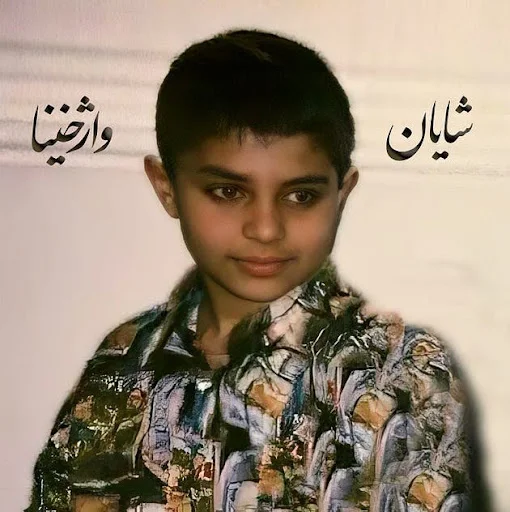
Before there was a face, there was a myth. In Tehran in the early 2000s, a bedroom recording began circulating that shouldn't have been possible: the first real rap music anyone had ever heard in Persian. The artist stayed hidden — no shows, no photos, no name attached to a face. So people started claiming to be him.
Impostors performed under his name in a city where the real one couldn't safely show up.
That's not a metaphor. That's the origin story of Farsi-language hip-hop: a genre whose founder existed, for years, only as a rumor and a voice. The real one was a teenager from Seyyed Khandan, a modest, unremarkable neighborhood in Tehran, who had fallen hard for Michael Jackson, then Coolio, then Tupac — memorizing verses in a language he taught himself so completely he could pass for American. By day he was the top student in the room. By night he was studying rap the way other people study scripture: flow, architecture, why a line lands and another doesn't.
In 2001, alone, with a home computer, he recorded the first Persian rap songs in history. Not demos — finished tracks, original beats, a language nobody had thought to rap in before. He gave the movement a name he invented himself, a word fused from "speech" and "melody," borrowed in spirit from an ancient Zoroastrian form of sacred verse. It wasn't branding. It was a claim: that Persian had always contained this music, and someone finally had the nerve to prove it.
The proof didn't stay private for long. The artists who would go on to define Persian hip-hop for a generation — the biggest names the genre has ever produced — have each, independently, pointed back to the same source. One recites a chorus from memory in interviews, the way you recite something that got inside you before you understood what music was. Another has said meeting him was the exact moment he realized this could exist in his own language at all, and started writing because of it. A third didn't just credit him — he performed a word-for-word cover, one of the most direct acts of homage hip-hop culture has. This isn't a self-told legend. It's a genre's founding generation, on the record, pointing at the same bedroom.
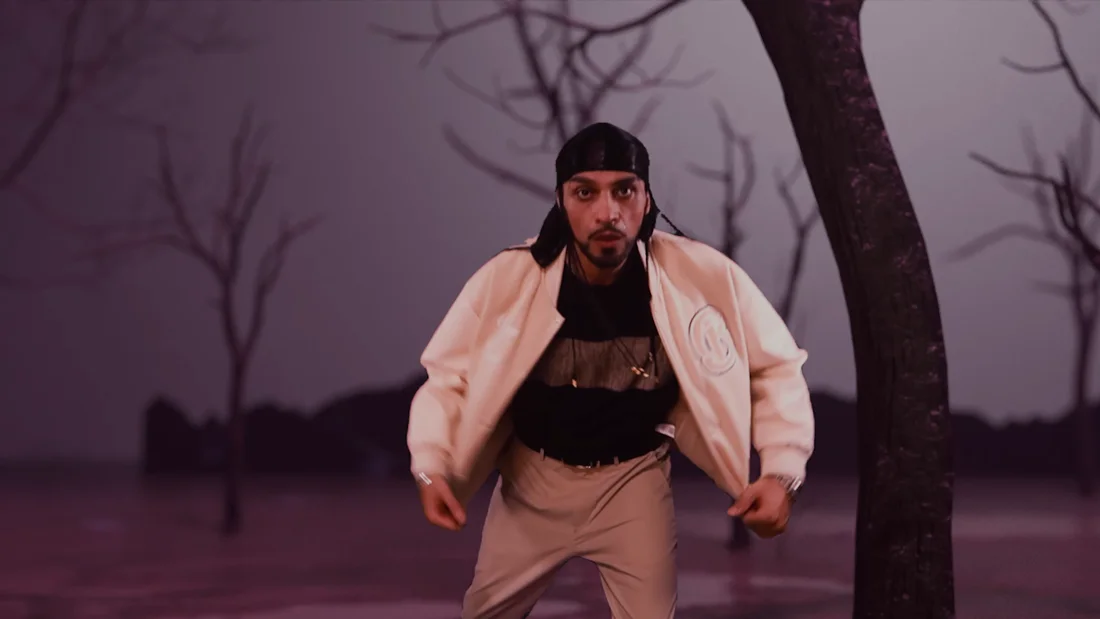
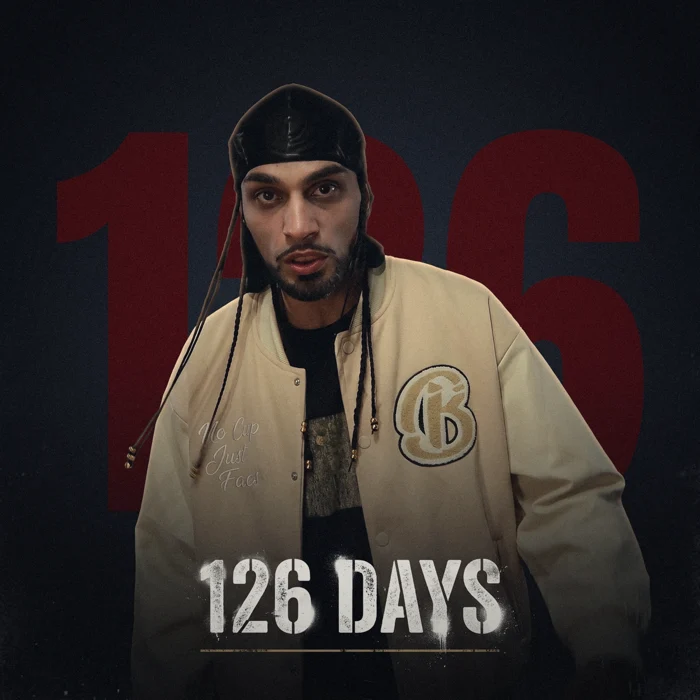
Shayan in the music video for "126 Days," 1405 (2026)
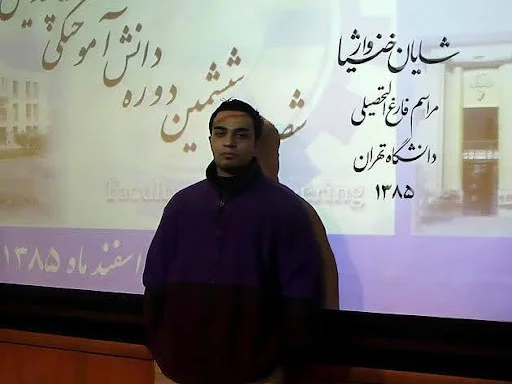
And while building all of this, he was simultaneously earning an engineering degree at Iran's top university — and when he sat the national graduate entrance exam, he didn't just pass. He ranked first in the entire country. The same mind writing verses at midnight was solving equations by morning. It's the kind of detail that sounds invented until you realize it's the reason everything he's done since has the discipline of a proof and the instinct of a poem in the same breath.
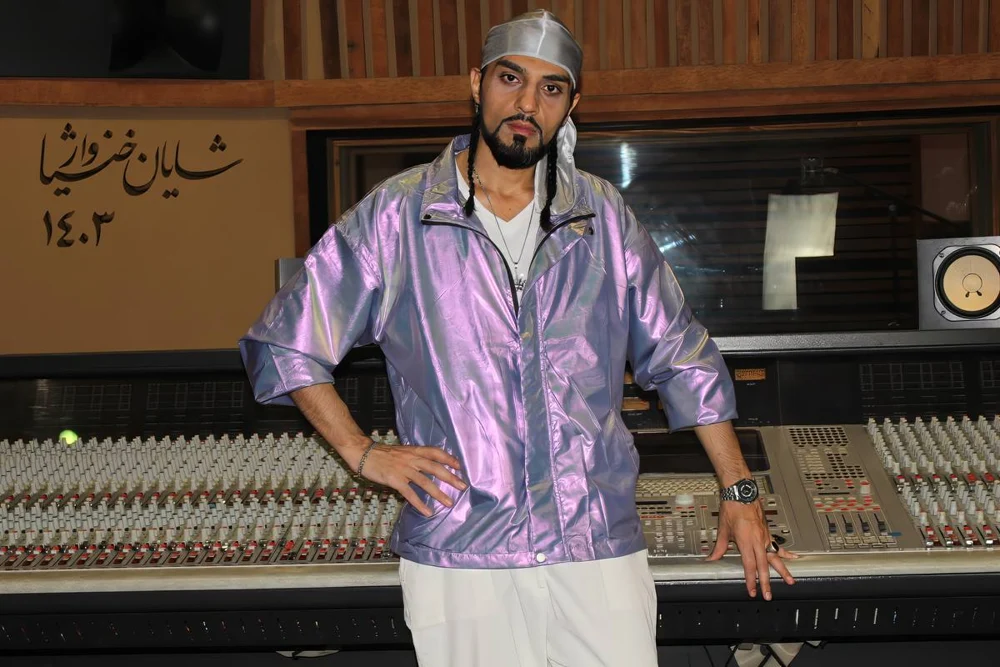
Then, for the better part of a decade, he disappeared — not from danger this time, but by choice. He walked away from performing entirely and turned inward: a stripped-down, plant-based way of living, meditation, years spent reading mythology, cosmology, the deep history of his own civilization. And quietly, without releasing a note, he taught himself the other half of the craft — production, mixing, mastering — because he'd started to believe Persian rap hadn't caught up musically to what it deserved to sound like. When he finally came back, he came back owning the entire instrument. Every beat, every verse, every final mix on his return work is his alone, start to finish.
Nobody handed him that comeback. He built the whole thing again, twice.
That return has only accelerated: new albums, a horror-tinged concept record about guilt and reckoning, a mythology-soaked project written in the same year his home country erupted into protest and, briefly, open war — closing on a track where he declares, in his own words, that he isn't just rewriting the history of a music genre. He's rewriting the history of a country.
That line is not a boast. It's a wager, and it's one he's already paying for. He cannot return to the country where he was born. Iranian authorities have made public, explicit, and current threats against citizens abroad who speak out — confiscation of property, freezing of assets, and, in the language of the state itself, punishment up to execution for "cooperating with the enemy." It is not a hypothetical for him. Family property he would otherwise be entitled to is now, for him personally, out of reach — a quiet, bureaucratic form of exile layered on top of the physical one.
He knows the list exists. He posts anyway.
Today, that same voice that once had to hide behind impostors speaks in daylight — bilingual, unhidden, on platforms the regime cannot fully silence, translating a lived, specific Iranian struggle into a language the rest of the world can actually understand. He didn't inherit this platform. He recorded it into existence from nothing, twice, in two different decades, in two different registers — first as a teenager with a stolen accent and a home computer, and now as a man with nothing left to lose by telling the truth.
The genre exists because he refused to accept that it couldn't. The voice exists now for the same reason.