A Historical Record · 2001 to Today

History of Persian Rap

A record, not a claim. Every section here comes with evidence — a photo, a date, and the words of the people who built this road themselves.

Timeline

A quick look back

Scroll through — starting today, going back to 2001.

1405 / 2026

126 Days & Se Sar Ejdaha

"126 Days," the year's protest anthem. And Se Sar Ejdaha — nine tracks of mythological street rap, Vaajkhonya's biggest project to date.

1404 / 2025

Hipnoz

A five-track EP released at Nowruz 1404 — a step toward a new sonic direction.

1403 / 2024

Kaf and the Singles

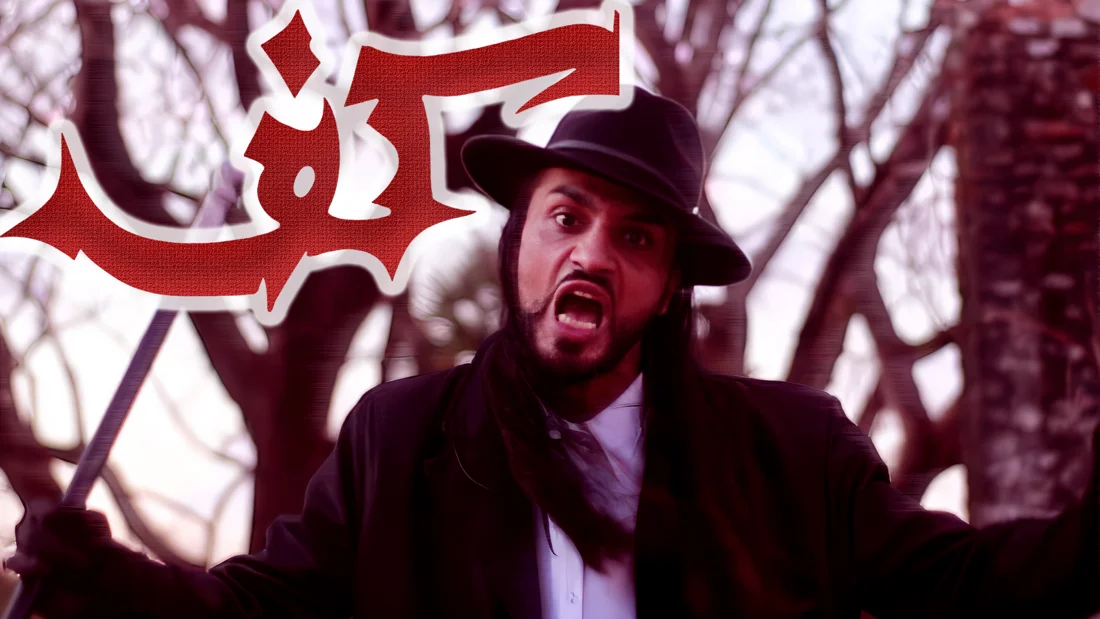
"Kaf," Vaajkhonya's first horrorcore statement. Alongside "Lahzeye Talayi," "Homaye Saadat," and "Be Mola Heyfe."

1402 / 2023

The Return

After years of silence, Vaajkhonya resurfaces with six singles — political, spiritual, street-level.

1381–88 / 2002–09

The Underground Notebooks

Shekaft, Akhgar, Gosil, Khoonkhonya — four underground releases that laid Persian rap's foundation.

1380 / 2001

The First Tracks

From a bedroom in Tehran, the first Persian rap tracks in history are recorded.

Tehran · 2001

The question nobody had asked

In the late 1990s, Shayan started pulling a crew together. The question he kept asking himself was simple, and at the time, completely unanswered: why hadn't anyone made real rap in Persian?

They called themselves "Sefr Bist-o Yek" — 021, Tehran's area code — reciting American verses at parties, winning battles, making a name. At the same time, Shayan was writing original Persian verses of his own. In 2001, he answered that question himself.

From a bedroom in Tehran, with a home computer and basic equipment, he recorded the first Persian rap tracks in history — among them "Javoone Irooni," "Bara Ineke Migiram Kam," "Donya Faghat Yani Pool," and "Shakh Neshin." These weren't demos. They were finished songs — original beats, original verses, original production — in a language nobody had touched this way before.
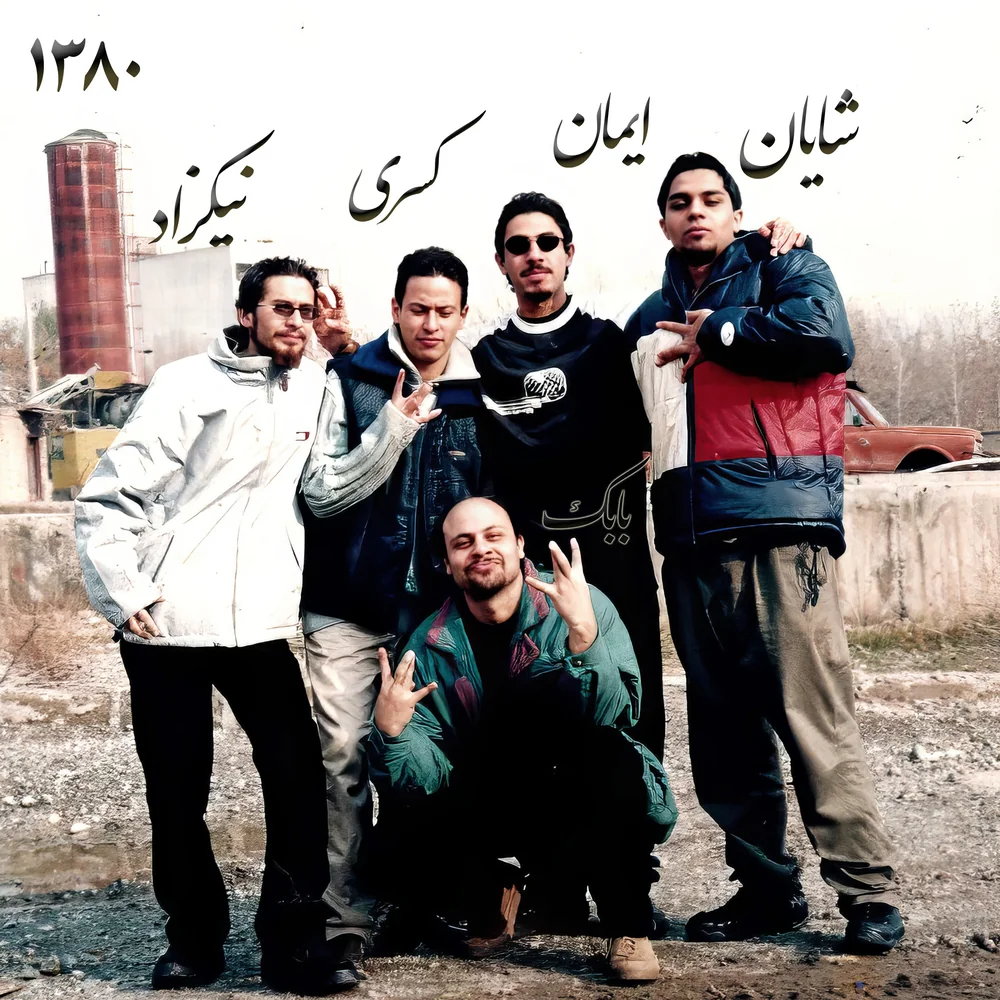
The Barobax 021 crew, Tehran, 2001

The Barobax 021 crew — Tehran, 1380 (2001)

The crew became "Vaajkhonya" — a word he built himself: Vaaj (word) plus khonya (melody) — the music of words. It's also the name of an ancient form of sacred Zoroastrian verse. That choice wasn't random.
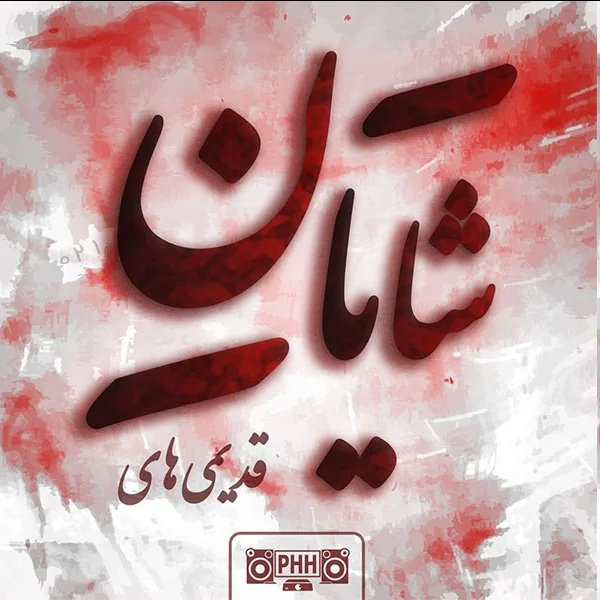
Shayan — the 1380 (2001) collection

The nine tracks recorded in 1380 (2001) — the first rap album in Iranian history, predating every one of the underground notebooks.

Download the 1380 Collection
Testimony

What the biggest names said

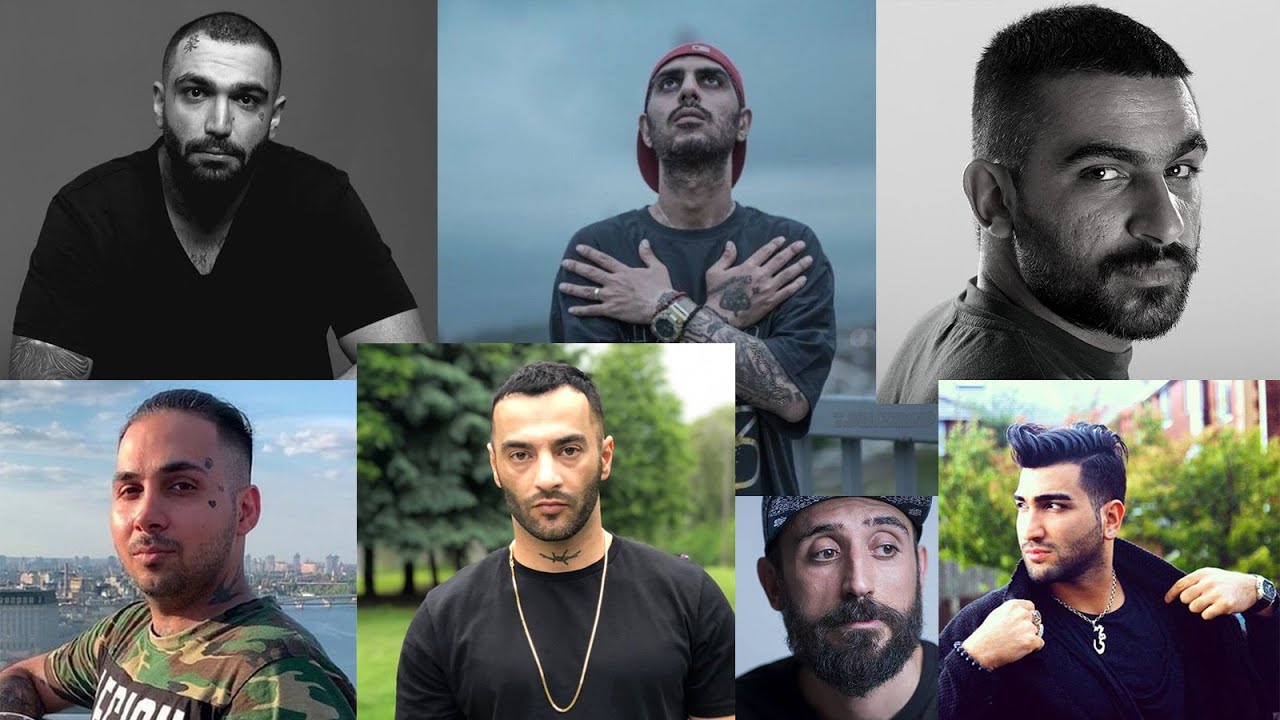
These are Persian rap's founding generation — artists with millions of listeners — who have repeatedly pointed to the same source. This isn't stated here for self-praise. It's stated because they said it first.

Reza Pishro has publicly said he's been a longtime fan of Shayan's and considers him a foundational influence. In one interview, he recited the chorus of one of Shayan's early tracks from memory — the way you recite something that got inside you before you understood what music was.

Reza Pishro

Yas has said hearing Shayan's verse on "Donya Faghat Yani Pool" was the first spark of Persian rap in his mind — the moment he realized this music could exist in his own language.

Yas

Hasin performed a word-for-word cover of "Bara Ineke Migiram Kam" — one of the most direct forms of tribute that exists in hip-hop culture.

Hasin

Hichkas, whose own early work was built on the foundation Shayan and Yashar laid, has named them as the veterans who shaped the entire scene.

Hichkas

Tohi, one of the most commercially successful voices in Persian music, has acknowledged Shayan's pioneering role at the genre's roots.

Tohi

Hear It From Them

Testimony from Persian rap's biggest names
► Pishro · Yas · Hasin · Hichkas · Tohi
An Honest Look

Where Persian rap went

Over twenty-five years, Persian rap found a huge audience. That's a real achievement. But growth in listener numbers hasn't always come with growth in artistic depth.

Much of what the genre produces today leans on simple, repetitive beats, surface-level rhymes, and a hook-first approach that leaves the verse behind. This isn't a judgment of any individual — it's an observation about where an art form has drifted. Rap, at its root, was the art of the word, not just the rhythm.

That observation is the reason Shayan came back — not to compete with anyone, but as a reminder that Persian rap can be exactly as deep, as mythological, and as precise as the Persian language itself.

I'm rewriting it with the ink of brave men's blood — not just rap's history, but the whole history of Iran.

— Moshte Akhar · Shayan Sarkesh · 2026
Old Songs Archive · 1381–88

The Underground Notebooks

Four underground releases that laid Persian rap's foundation: Shekaft (1381/2002), Akhgar (1383/2004), Gosil (1385/2006), and Khoonkhonya (1388/2009) — recorded from a Tehran bedroom between 1381 and 1388 (2002–2009). These are the earliest documents of a chapter of Iranian music history, still available on Vaajkhonya's Telegram channel.

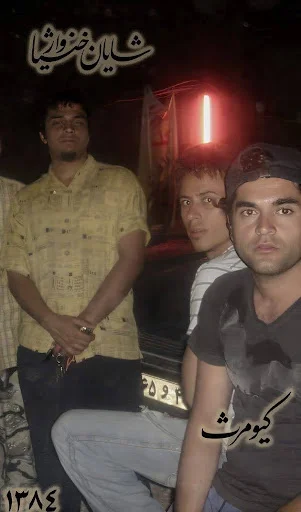
The Barobax 021 crew, 1384

Shayan with Kioumars and Kasra, two other members of Barobax 021, the first Iranian rap crew, 1384 (2005)

When this photo was taken, none of them had a stage, an interview, or even an official photo — just a room, a handful of basic equipment, and a shared conviction that Persian rap deserved to be taken seriously. That same raw, unpretentious friendship still underpins how Vaajkhonya tells its own story today.

Political rap carried real risk in those years, and Shayan was studying at the University of Tehran's engineering faculty at the time — the center of the country's political activity. That's why, on the first four notebooks, he recorded under aliases — Yaver, Tahmasb, and Goudarz — rather than his own name, a choice that kept his identity hidden from university officials, though it also confused many of his own fans and made him harder to track down.

2011 to 2023

Ten years of silence

In 2011 (1390), Shayan left Iran, planning to pursue a PhD alongside his music. Life took a different turn. He gradually moved toward a plant-based, raw-food lifestyle and different forms of natural healing — the same approach that resolved chronic health issues, including a sinus infection, and pulled him further into that path.

It was a decade of public silence, not mental silence. He kept following every new rap release, especially West Coast hip-hop, and Northern California in particular — the style closest to his own instincts — and during these years, he seriously taught himself professional beat-making, since the rhythms in existing Persian rap felt simple and repetitive to him.

Meanwhile, longtime fans never stopped looking. They built pages and channels under his name, waiting for a return he increasingly felt he owed them. On Yalda night, 1402 (December 2023), he came back officially — and Vaajkhonya's first music video in years was released.

Keep exploring Hear the Full Discography
Go to Music →